

Thermoplastic sheets are flat polymer materials that soften when heated and become firm again as they cool. This behavior lets manufacturers cut, bend, and form many grades into parts without the permanent chemical cure associated with thermosets. It does not mean a sheet can be reheated indefinitely without losing performance: the resin, additives, and processing history still matter. The category includes rigid materials such as ABS and HDPE as well as flexible, modified sheets used in vehicle interiors. For a buyer, the useful question is which sheet will survive the forming process and then do its job in the finished part.
How Do Thermoplastic Sheets Work?
Most thermoplastic sheets begin as pellets or compounded material that a manufacturer melts, extrudes, cools, and cuts or winds. The formulation is part of the product: changing the resin blend or additives can alter hardness, surface appearance, flow during forming, and the behavior of the finished part. Those effects have to be checked on the proposed grade rather than inferred from the word thermoplastic.
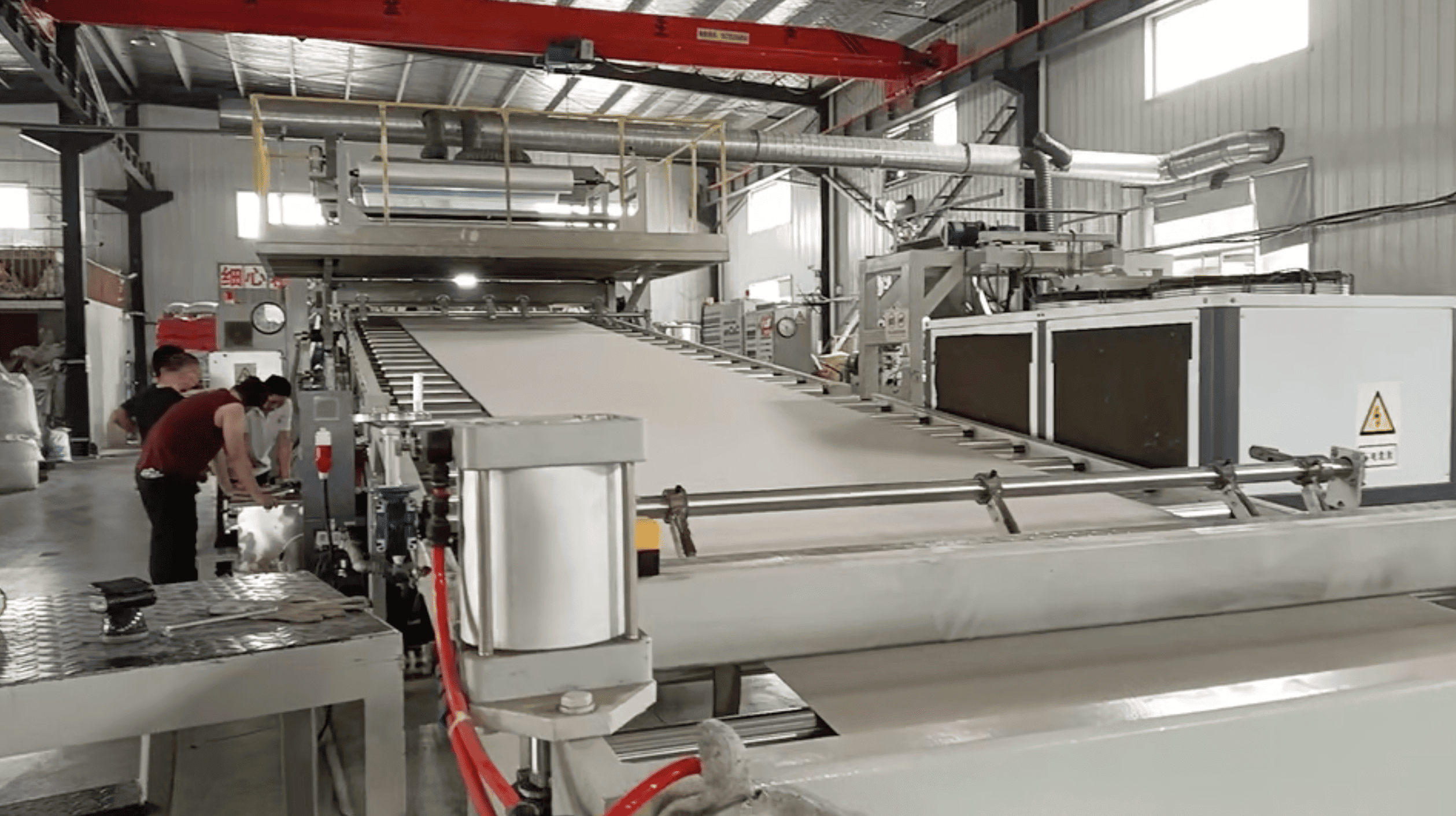
During forming, heat increases the mobility of the polymer chains until the sheet can stretch or bend. A vacuum can draw it against a tool; other operations use pressure, matched molds, or local bending. The formed sheet then cools and holds the shape of the tool. A part that looks acceptable immediately after forming can still warp, thin excessively at a corner, or fail a later temperature test. Heating time, sheet temperature, tool geometry, cooling, and trimming all belong in the process specification.
Thermosets behave differently after curing. Their crosslinked network does not melt back into the original processable material when reheated. A thermoplastic can generally be softened and reprocessed, although repeated heat exposure, contamination, coatings, or reinforcement can limit what the reclaimed material is good for.
| Comparison | Thermoplastic sheet | Thermoset sheet |
|---|---|---|
| Response to reheating | Softens within a material-specific temperature range | Does not remelt after curing |
| Reprocessing | Often possible when composition and contamination are controlled | Cannot be remelted into the original sheet |
| Typical selection reason | Formable sheet and parts made by heating and shaping | Permanently cured parts chosen for a different service requirement |
What Types of Thermoplastic Sheets Are Common?
The names in a plastics catalogue do not all sit at the same level of classification. ABS and PP identify polymer families. TPE describes a broad class of materials with elastic behavior and thermoplastic processing. TPO usually refers to a thermoplastic olefin formulation, while TPV is a dynamically vulcanized type of thermoplastic elastomer. Suppliers still list TPE, TPO, and TPV separately because buyers use those terms to describe different material and part requirements. The actual formulation and grade matter more than the label alone.
TPE Sheets
A TPE sheet is an option when a part needs an elastic feel but must also be processed as a thermoplastic. A vehicle floor mat, for instance, needs a surface and edge that can be formed to the floor, a suitable feel underfoot, and enough stability to retain its shape in service. Asking only for "soft TPE" says little about those requirements. Shore hardness, the temperature at which the part is formed, stiffness after cooling, and the intended surface should all be specified.
Three Superman New Material lists TPE sheet for car floor mats, front carpets, pickup bed mats, trunk mats, commercial-vehicle carpets, and spare-tire cover applications. One grade will not meet every vehicle specification. Its formulation can be adjusted toward a target feel or support level; the compound and sheet process are selected together for the part.
TPO Sheets
TPO sheets are often considered where an olefin-based formulation must balance formability, weight, surface requirements, and stiffness. TPO is a formulation category, not a fixed recipe or a guaranteed set of weathering and temperature results. The company's catalogue places its TPO sheet alongside TPE for automotive mats, carpet-related components, cargo-area parts, and spare-tire cover applications.
For a part with a large drawn area, the useful comparison is usually made on formed samples rather than flat-sheet swatches. Check local thinning around the deepest draw, the visibility of the grain after stretching, and how the edges behave after trimming. If a specification calls for color matching or outdoor exposure, identify the test conditions and the grade under consideration. The name TPO alone cannot settle either question.
TPV Sheets
A TPV sheet contains a rubber phase that has been dynamically vulcanized within a processable thermoplastic phase. That structure is why TPV can combine elastic recovery with thermoplastic manufacturing methods. It also explains a common source of confusion: the rubber phase is crosslinked, but the material as a whole can still be processed because its continuous thermoplastic phase softens. TPV is a type within the wider TPE family, although purchasing catalogues often give it a separate heading.
The company positions TPV sheets for automotive interior and exterior material development. A buyer considering TPV for a repeatedly flexed edge or a formed interior surface should request grade-specific data and part-level tests. A number measured on a TPV pellet sample cannot be copied into a sheet specification without checking the grade, sample preparation, and method.
ABS, Polycarbonate, PETG and PVC Sheets
Rigid and semi-rigid thermoplastic sheets fill other jobs. ABS is used for formed housings and panels where a buyer needs a defined balance of stiffness and impact behavior. Polycarbonate is considered for tough transparent guards or formed components, but drying and forming conditions need care. PETG is a familiar option for clear formed displays and trays. PVC appears in sheet applications where its particular chemical, processing, or cost profile is appropriate; the grade and any applicable safety requirements must be checked.
These are broader-market examples, not an assertion that Three Superman New Material supplies these sheets. Optical appearance, drying, wall thickness, and service temperature can decide the choice.
HDPE and PP Sheets
HDPE sheet is used when the part needs an olefin material and the design calls for impact, moisture, or chemical-exposure performance. Three Superman New Material's catalogue associates its HDPE sheet with outer wheel-housing and underbody protection applications, including engine and vehicle skid-plate directions. A protective panel still needs its own impact, temperature, mounting, and fit checks. A resin-family description is not a substitute for testing a finished part fixed to a vehicle. For property detail, see HDPE sheet characteristics.
PP sheet introduces another decision: construction. The company's materials list plain PP board, PP combined with nonwoven or membrane layers, and PP with glass-fiber reinforcement. Those are different structures, even if they share a PP label. A plain sheet might be evaluated for its formed shape and mass; a laminate also brings adhesion, face appearance, and end-of-life separation into the discussion. A glass-fiber structure changes stiffness and may affect how the sheet can be formed.
The listed PP applications include wheel covers, storage boxes, luggage-compartment trim and partitions, seat-back panels, and spare-tire cover surfaces. A comparison such as "PP is stronger than HDPE" would be misleading without grades, thicknesses, and test methods.
Key Properties and Trade-Offs
Thermoplastic sheet is attractive because it can be made in flat stock, cut, heated, and formed. Those process options do not give every resin the same properties. A softer sheet may feel right in a cabin but lack the stiffness needed to bridge an unsupported span. A stiffer sheet may protect an underbody area yet be harder to draw into a tight corner without thinning. Thickness and part geometry change both outcomes.
Impact performance also depends on temperature and the way the part is loaded. A material that survives a room-temperature handling test may need a separate cold-impact check for a wheel-housing application. Chemical resistance depends on the fluid, concentration, contact time, temperature, and any stress in the part. For an automotive interior, odor and VOC requirements should be written as named tests with limits for the proposed grade, not assumed from a claim that a polymer is "eco-friendly."
Modified compounds allow a supplier to work toward a specified combination of hardness, texture, color, and processing behavior. But a formulation change can improve one requirement while making another harder to meet. A buyer who asks for a deeper grain, a softer touch, and higher stiffness should rank those requirements before a sample run. Keep the approved sample and the agreed testing method as references for future lots.
Offcuts and clean in-process scrap can sometimes be returned to a controlled production stream. Whether that works depends on the resin and on layers, inks, adhesives, filler, coating, and contamination, as well as the allowed regrind level. The distinction between processable again and collected and recycled in practice matters especially for composites. The US Environmental Protection Agency's recycling guidance also tells readers to check what local collection programs accept; a recyclable resin name does not guarantee a route for a particular finished article.
Limitations to Consider
Three limits deserve attention before selecting a sheet. First, sustained load can cause creep, particularly if heat and unsupported spans are involved. Design ribs, supports, and fastening points around the actual load rather than treating sheet thickness as the only answer. Second, each grade has a useful service-temperature range that is different from its forming temperature. A sheet that forms easily at elevated heat is not automatically suitable near an engine.
Third, outdoor exposure and compliance requirements need specific evidence. UV resistance, flame behavior, food-contact status, medical suitability, interior odor, and VOC performance cannot be inferred from the broad term "thermoplastic." Pigments, additives, and backing layers can change the outcome. Request a test report for the selected material and, where necessary, test the assembled part after forming.
Where Are Thermoplastic Sheets Used?
Automotive Interior and Exterior Parts
Automotive parts show why buyers should specify the component before the material. A cabin mat and a wheel-housing liner are both sheet-based, but the first raises questions about touch, surface grain, cleaning, edge shape, and cabin emissions. The second has to deal with debris impact, attachment, temperature changes, and exposure to water or road chemicals. Selecting them by the same generic claim of "durable plastic" would miss the design work.
Three Superman New Material's product material groups TPE, TPO, and TPV with automotive interior-sheet development. It lists mats, front carpets, trunk or cargo liners, pickup bed mats, and spare-tire covers among the relevant directions. HDPE is associated with wheel-housing and underbody protection. Its PP range includes plain and composite structures for wheel covers, storage boxes, luggage-area trim, partitions, seat backs, and spare-tire cover surfaces. These categories help open a material discussion; the exact grade, backing, tool, and acceptance tests remain project-specific.
For a luggage-compartment liner with deep sidewalls, ask for the minimum wall thickness at the draw, not just the flat-stock gauge. A textured face must still look acceptable after stretching; a composite backing can change forming and recycling assumptions.
Packaging and Formed Trays
Thermoformed trays use heated sheet to create cavities, flanges, and locating features. Material choice follows the product: a protective transit tray, a display insert, and food packaging have different priorities. Wall distribution, stacking, cleaning, and disposal route can be more consequential than the resin name on a supplier's price list. Food contact requires the appropriate grade and documentation; it is not a property of thermoplastic sheet as a whole. Packaging is an industry example here, not a claim about this manufacturer's product line.
Medical, Orthotic and Safety Applications
Orthotic shells, guards, and some medical-device components can be shaped from suitable thermoplastic sheets. Heating and forming may help fit a part to a contour, but patient contact, disinfection, biocompatibility, and traceability are separate questions. Specify the regulatory pathway and validation required; an automotive-grade sheet is not automatically suitable for medical use. These are general industry applications, not claims about Three Superman New Material's supply range.
Construction, Consumer and Industrial Parts
Sheet can become a protective panel, enclosure, machine guard, appliance component, or formed consumer part. The relevant material differs with the job. A transparent guard may lead the conversation toward a suitable clear grade; a wet-service liner might lead toward an olefin sheet. Neither example proves that one material works for every exposure. In construction and industrial settings, fire ratings, fastening, long-term load, and chemical contact often narrow the options quickly.
How to Specify a Thermoplastic Sheet for Your Application
Start with the part, not a list of attractive material adjectives. A drawing should show overall size, wall sections, return edges, cutouts, mounting points, and areas that cannot thin or distort. State whether the request is for flat sheet supply, formed parts, or both. If there is an existing tool, share its drawing or a sample part and identify what the current material does well or poorly.
Next, describe the service conditions. Does the component live in a passenger cabin, under a vehicle, or outdoors? What are the credible temperature extremes and the duration of exposure? List the fluids it may contact, the way it is cleaned, and whether a load is continuous or intermittent. "Chemical resistant" has no usable meaning for a quotation until the chemical and exposure are named.
Define the sheet requirement in terms a supplier can evaluate: preferred family or approved alternative, nominal thickness and permitted finished-wall minimum, required width, hardness or stiffness target, color, texture, and visible-face standard. Shore A and Shore D are different scales used over different hardness ranges; provide the scale with any target value. If there is no agreed hardness number, send a reference sample and describe the function the material must perform. For a composite, show which face is visible, what the backing does, and how the layers must behave during forming.
Then specify the production route. Say whether the part will be vacuum formed, pressure formed, matched-mold formed, or simply cut from flat stock. Share anticipated volume, prototype quantity, and tool status. Identify the tests that govern approval: for example, a named odor or VOC method for a cabin part, cold-impact conditions for an exterior part, or a documented flame requirement where applicable. Ask for grade-specific documentation instead of a generic material declaration.
A drawing, a physical sample, and service conditions can start a discussion even if the final grade has not been chosen. See the company's thermoplastic sheet range for its material categories.
Can Thermoplastic Sheets Be Vacuum Formed?
Yes, many thermoplastic sheets can be vacuum formed. The sheet is heated until it can deform, drawn against a tool by a pressure difference, then cooled before removal and trimming. That simple sequence hides material-specific decisions. Some sheets need particular drying or heating practices; some geometries call for pressure forming or matched tooling to control detail and wall distribution. There is no single oven setting or draw ratio that fits TPE, TPO, TPV, HDPE, PP, and the rigid transparent plastics alike.
Deep corners and tall walls consume thickness. Tool draft, vents, cooling, and clamping affect the result, particularly with a textured or laminated sheet. Inspect local thickness, trimmed edges, dimensional fit, and exposed-face appearance on the formed sample.
Three Superman New Material describes a vacuum forming service for automotive interior components and brackets using customer-supplied molds. For an OEM inquiry, send the tool drawing, intended sheet material, part dimensions, surface requirements, and sample and production quantities. Confirm blank size, draw depth, and tool fit against current equipment before placing an order.
Frequently Asked Questions
What Is the Difference Between Thermoplastic and Thermoset Sheets?
A thermoplastic sheet softens when heated within its processing range and becomes firm again on cooling. A thermoset cures into a crosslinked network and does not remelt into its original processable form. That difference affects forming and scrap handling, but it does not rank one family as better for every part. Compare the actual service temperature, loads, and manufacturing method.
Are All Thermoplastic Sheets Recyclable?
No. Many thermoplastics can technically be reprocessed, but a finished sheet may have mixed layers, adhesive, filler, coating, or contamination that complicates collection and reuse. Local recycling programs may not accept the finished article. Ask separately whether clean production scrap can be reused and what end-of-life route exists for the assembled product.
Can Thermoplastic Sheets Be Vacuum Formed?
Many can. The useful answer depends on the grade, starting thickness, part geometry, tool, and the required finished-wall thickness. A material that forms a shallow tray may fail to hold its grain or thickness through a deep automotive draw. Sample the part and inspect the areas of maximum stretch before approving the sheet.
Which Thermoplastic Sheet Is Suitable for Automotive Interiors?
TPE, TPO, and TPV are possible starting points for flexible automotive interior components; PP, including composite structures, is another option for trim and panels. The choice depends on part function, touch, stiffness, surface, forming method, cabin requirements, and the applicable test plan. There is no universally best sheet for every interior component. Use the drawing and a reference sample to narrow the grade.
What Information Is Needed for a Custom Thermoplastic Sheet Quote?
Send a part drawing or physical sample, intended application, material preference or performance target, sheet thickness and width, hardness or stiffness requirement, color and texture, forming method, and expected quantities. Include the existing mold information if one is available. Identify required tests and documentation before asking for a firm material recommendation or production quotation.
Discuss Your Thermoplastic Sheet Requirements
Three Superman New Material works with TPE, TPO, TPV, HDPE, and PP sheet directions for automotive parts and offers vacuum forming OEM work based on customer-supplied molds. The right next step is a review of the part and the conditions it must meet. Send your drawing or sample with the target material, dimensions, surface, forming method, and estimated quantity. If the material is still open, describe the current part and its failure or performance target so the sheet and forming route can be considered together.